What Robotics Classes Cost in Singapore (2026)

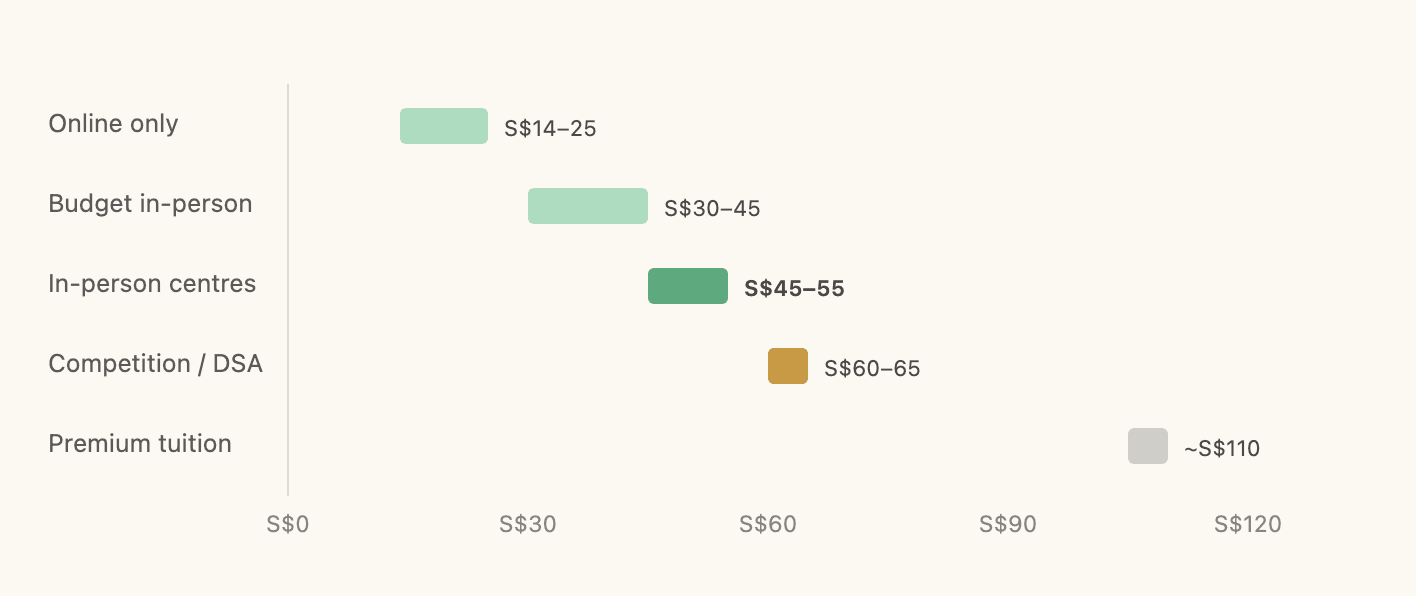
In-person robotics and coding centres in Singapore cluster at roughly S$45 to S$55 an hour, inclusive of GST and kit use. An eight-lesson block of two-hour classes should land around S$720 to S$800. Below about S$40 an hour you are usually paying for a larger class, a shared kit, or an online format. Competition and DSA tracks run higher, commonly S$2,400 to S$2,900 a season.
That is the whole answer, and it took us a market review to be able to write it, because almost nobody in this industry publishes a price.
In short
S$45 to S$55 an hour for in-person classes, GST and kit included
S$720 to S$800 for a block of eight two-hour lessons
S$2,400 to S$2,900 a season for competition or DSA tracks
Under S$40 an hour usually means bigger classes, shared kits, or online
S$50 to S$98 registration is normal, and kits should be included
Try comparing two centres and you will notice the pattern quickly. Most put fees behind an enquiry form, so you submit your details, wait for a reply, and get a quote you cannot easily compare against the next one.
It is close to universal. Roboto Coding Academy, to take one example, describes its competition programmes in detail and then directs you to WhatsApp for fees. We understand why. A price out of context invites comparison on the wrong axis, and a phone call converts better than a number on a page.
It still costs you something. Comparing three centres properly becomes three enquiries and about a week, and the parents who give up part-way tend to pick on convenience instead of fit.
So we publish ours, and we have published what we found about everyone else's.
In July 2026 we reviewed published rate cards across in-person robotics and coding providers in Singapore. Where a centre publishes a per-hour figure we used it directly. Where it publishes a term or package price we divided by contact hours to get a comparable rate.
Two things we normalised, because they are where most of the confusion lives:
GST. Some centres quote inclusive, some exclusive. The prevailing rate is 9%, in force since 1 January 2024 (IRAS), and that gap is enough to move a centre from one band to another.
Kit and material fees. Some bundle them, some charge weekly on top. We counted the total a parent actually pays.
The limitation is worth stating. Rate cards change, and centres that never publish are absent from the sample by definition. Treat the figures as a well-supported range rather than a census.
Most centres sell in blocks rather than single lessons, and the common shape is eight lessons of two hours, so sixteen contact hours.
At market rate that is S$720 to S$800. Nullspace, one of the few centres that publishes openly, states rates of "$45-$52 per hour (inclusive GST and material fee)" and prices a ten-week, two-hour-a-week term at S$1,000, which works out at S$50 an hour (Nullspace Robotics).
Two things worth checking on any quote:
Registration fee. S$50 to S$98 is normal, charged once. Ask whether siblings are exempt.
Kit fees. The kit should be included and stay at the centre. A separate weekly charge is a way of making a headline price look lower than it is.
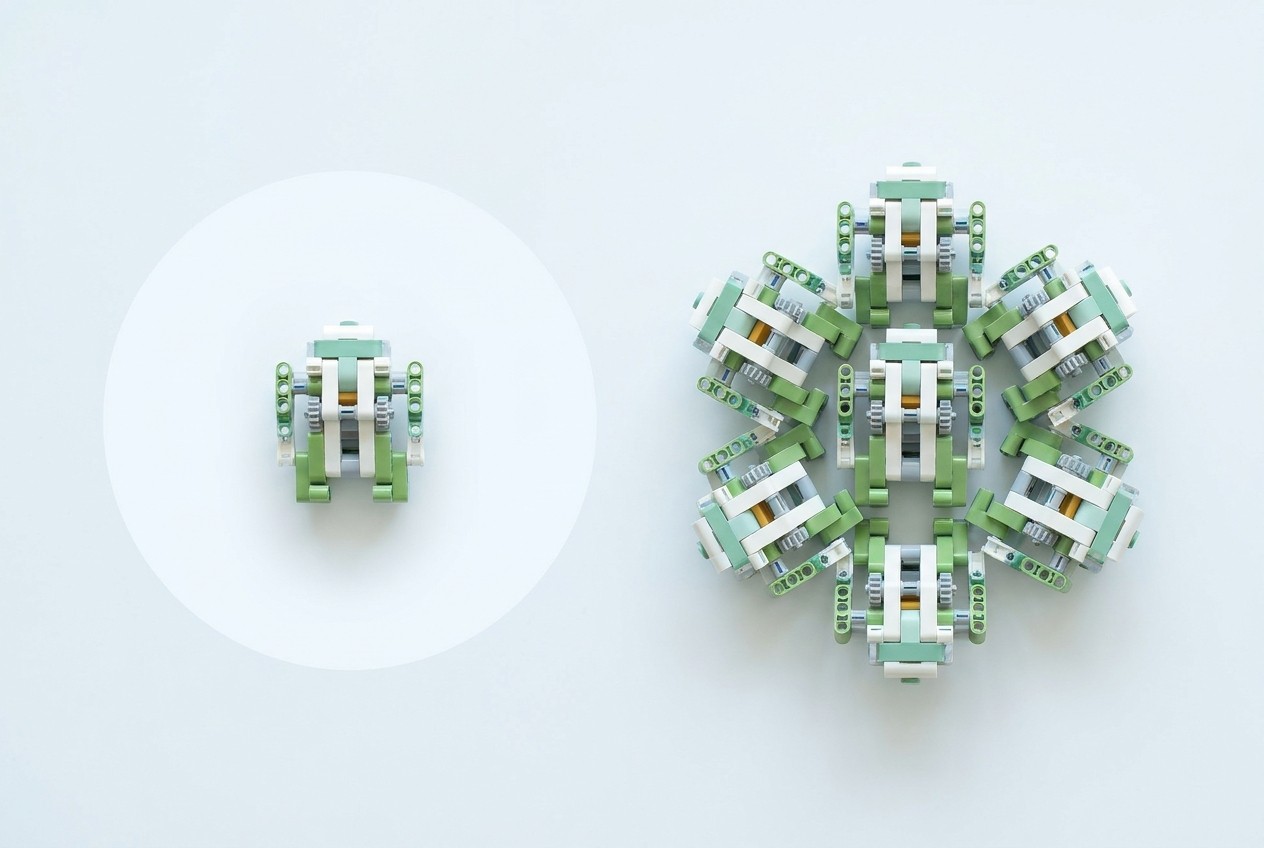
Class size. The single biggest lever, on both price and outcome. A ratio of one to six costs more than one to twelve, and for a six or seven-year-old it is the difference between building and waiting.
Whether the kit is included. Covered above, and worth asking twice.
Who teaches. Ask whether the person in the room in week six is the person you met at the trial.
Term length. Longer commitments usually carry a discount. That is fair, but only if you are confident after the trial.
Format. Online undercuts everything because there is no hardware, which also removes the part that gives robotics its value.
Cheapest is rarely best value. The most expensive is not automatically better either, and we would rather say both.
Below about S$40 an hour, something is usually being traded. Larger classes, kits shared between children, an online format, or a teaching assistant rather than an instructor. None of those is dishonest, and for some children a bigger, cheaper class is genuinely fine.
What matters is knowing which trade you are making. A class of fourteen at S$32 an hour is not the same product as a class of six at S$50, and the price gap is doing exactly what it looks like it is doing.
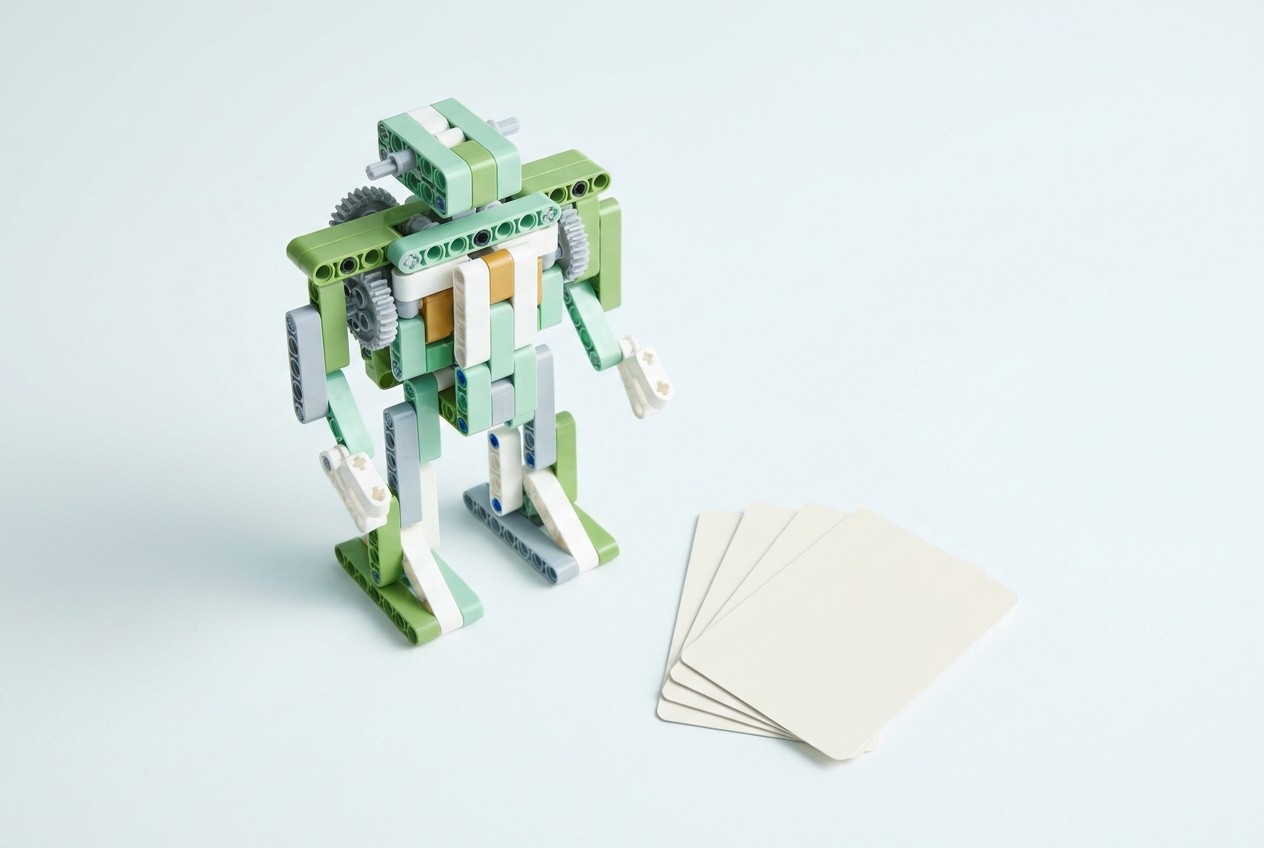
Our blocks are eight classes of two hours, sixteen contact hours, which is the same unit most centres use. We sit inside the S$45 to S$55 band, kits included and kept here, with registration waived for siblings.
The class schedule and the robotics programme are both on the site. If your child is aiming at competitions or DSA, the competition track is priced separately.
Ask four questions and you can compare any two centres properly.
What is the total, including GST, kit and registration? Not the per-session headline.
How many contact hours does that buy? Divide. Now you have a rate you can compare.
How many children in the class, in the youngest band? Not the average across the centre.
What does my child build, by name? A centre with a curriculum can tell you. One without will answer in adjectives.
About Champs Robotics. We run LEGO robotics, coding and 3D printing at 12A Kensington Park Road, Serangoon Gardens.
LEGO robotics for kids in Singapore, including what your child actually builds
What age should kids start coding, and how the MOE pathway changes the answer
What the evidence actually supports about robotics and child development
Price only tells you half of it. The other half is whether your child spends the hour building or watching, and an hour in the room settles that faster than any comparison table. Book a free trial class and judge it yourself.
How much do robotics classes cost in Singapore? In-person centres cluster at roughly S$45 to S$55 an hour, inclusive of GST and kit use. That puts a block of eight two-hour lessons at about S$720 to S$800.
Why won't centres tell me their price? Most put fees behind an enquiry form. It converts better for them, and it makes comparison slower for you. A centre that publishes openly is giving up a small advantage, which is worth noting in itself.
Should the kit be included in the fee? At a well-run centre, yes, and it should stay on site. A separate weekly kit charge usually means the headline price is not the real price.
What does a competition or DSA track cost? Commonly S$2,400 to S$2,900 for a season of roughly 18 to 24 sessions. The per-hour rate is higher than a standard class because the coaching load is higher.
Is a cheaper class worse? Not automatically. Below about S$40 an hour something is usually being traded, most often class size or kit sharing. For some children that is fine. The point is to know which trade you are making.