LEGO Robotics for Kids in Singapore: Parent's Guide

LEGO robotics is a building system paired with a programming environment: a child builds a machine from bricks, motors and sensors, then writes code that makes it do a job. In Singapore it costs roughly S$45-55 an hour at an in-person centre, and it is the most common route into the National Robotics Competition, which Science Centre Singapore has run since 1999.
One thing to know before anything else: LEGO retired the entire SPIKE range on 30 June 2026, and FIRST LEGO League ends after the 2026-27 season. Neither is a reason to hold off, because existing kits are supported to 2031 and the skills transfer regardless. But both have dates attached, and a centre that can't tell you what they are isn't following its own field. Details below.
This guide covers what your child will actually build, which kit fits which age, what the fees should look like, and where the pathway now leads.
We teach it six days a week at Kensington Park Road, so some of this is from the classroom rather than from a brochure.
In short
Cost: roughly S$45-55 per hour at an in-person Singapore centre; about S$720-800 for an eight-lesson block.
Age: six for a first taste, seven to eight for steady progress.
Platform: LEGO retired SPIKE on 30 June 2026. Existing kits work until at least 2031. The successor is Computer Science & AI.
Competition: FIRST LEGO League ends after 2026-27. New hardware is required from the 2028-29 season.
Kits should be included in the fee and stay at the centre.
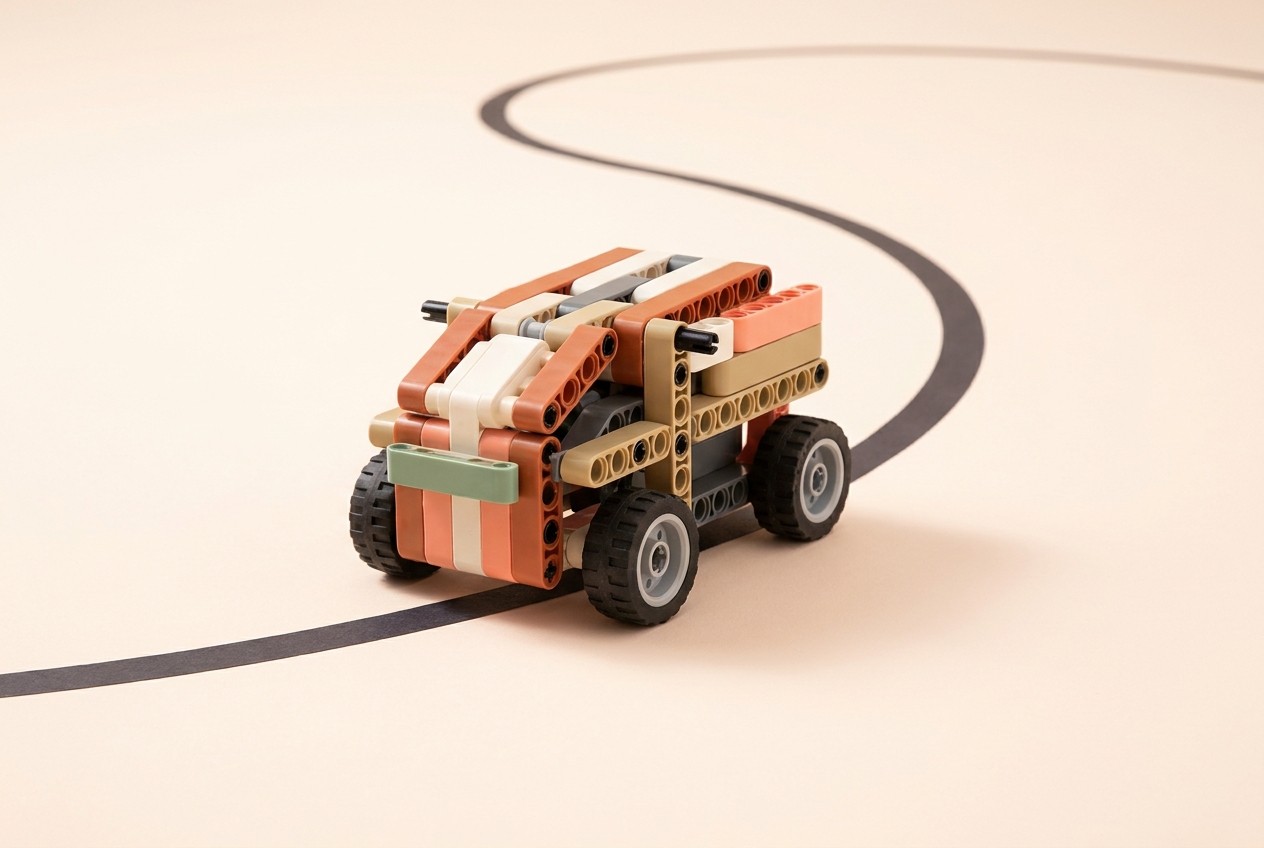
A child gets a kit: bricks, a programmable hub, two or three motors, and a set of sensors that detect colour, distance or tilt. They build a machine to a guide, or later to their own design. Then they program it, dragging blocks that set motor speed, read a sensor, or loop an action until something changes.
The loop that matters is the third step: the robot does something not quite right, and the child works out whether the fault is in the build or in the code. That distinction, mechanical problem or logic problem, is most of the educational value, and it is the thing a screen-only coding course cannot reproduce.
Before the age bands, the thing most parents haven't been told: LEGO Education retired the entire SPIKE range on 30 June 2026.
That matters, because SPIKE is what most robotics classes in Singapore run on, ours included. Here is the full picture from LEGO Education's own retirement notice (LEGO Education):
Sales of SPIKE Prime, SPIKE Essential and their components ended 30 June 2026.
The SPIKE App is supported until 30 June 2031. After that it stays available online but stops receiving updates and bug fixes.
Spare parts are stocked until roughly June 2028.
Existing lessons stay accessible through 30 June 2031.
The replacements are LEGO Education Computer Science & AI (Grades K-2, 3-5 and 6-8) and LEGO Education Science.

Your child's learning has not expired. Retired means LEGO stopped selling it, not that it stopped working. A centre with SPIKE kits on the shelf can teach on them for years yet.
The age bands, for reference:
Kit | Official band | Roughly | Status |
|---|---|---|---|
SPIKE Essential | Grades 1-5 | P1-P5 | Retired from sale Jun 2026; app supported to 2031 |
SPIKE Prime | Grades 6-8 | P6-S2 | Retired from sale Jun 2026; app supported to 2031 |
Computer Science & AI | Grades K-2, 3-5, 6-8 | P1-S2 | Current line |
Bands are guides, not gates. A strong P4 student works comfortably in Prime-level material, and terms completed matter more than age.
One more signal worth using. The older MINDSTORMS line was discontinued back in 2022, and a number of Singapore centre websites still advertise it as their platform. That's four years stale. The useful question to put to any centre isn't whether SPIKE is finished, it's whether they already knew, and what they plan to do. A good answer has dates in it.
"Hands-on STEM learning" tells you nothing. Here is the concrete version, taken from our own course outlines.
Level 1. A hopping racer, a robot that clears a table, a break-dancing robot, and a goal scorer. The child sets motor speed and direction, adds sound and lights, and makes a robot reverse when it bumps into something.
Level 2. A line-following robot, a bike that speeds up on a slope, a music machine, a scorpion that strikes, a helicopter that spins faster as it rises. Colour and distance sensors start changing what the robot does, and variables let it count and keep score.
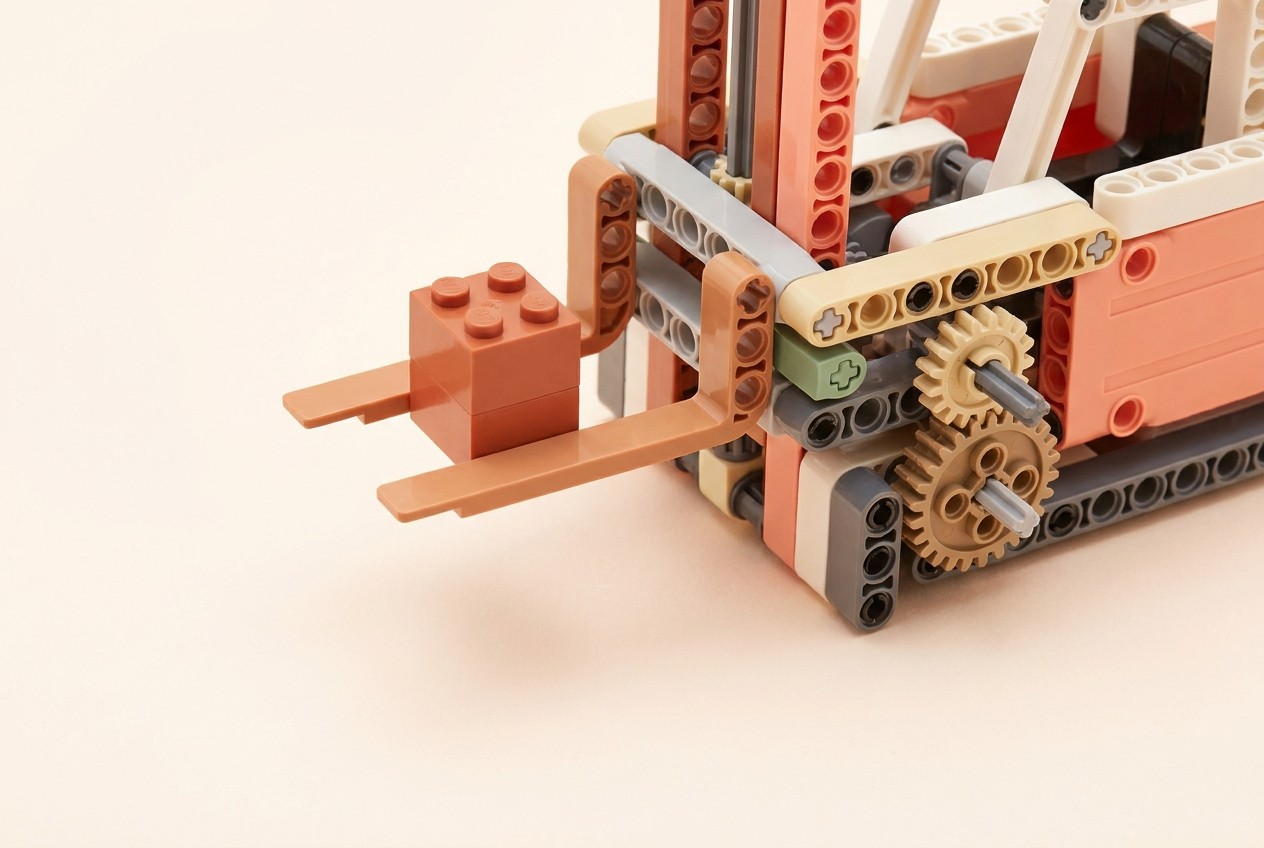
Level 3. A sumo robot with two colour sensors, a working forklift, a geared speed robot, a Ferris wheel, a guitar, and a rock-paper-scissors game. Gear ratios get traded between speed and power. The child writes their own reusable blocks of code for the first time.
By Levels 5 and 6 the work changes character: mission-based challenges with several objectives in a single run, tuned until the robot behaves the same way on every attempt rather than once by luck.
The useful question to ask any centre is exactly this one. If they can name the builds, they have a curriculum. If they answer in adjectives, ask again.
Fees here are unusually opaque. Most centres put prices behind an enquiry form, which makes comparison hard and is worth noting as a signal in itself.
From our own market review of in-person LEGO robotics and coding providers in Singapore, conducted in July 2026 across published rate cards:
In-person centre classes cluster at S$45-55 per hour, inclusive of GST and kit use.
Below about S$40/hour you are usually looking at larger classes, shared kits, or an online format.
Competition and DSA-preparation tracks run higher, commonly S$2,400-2,900 for a full season of roughly 18-24 sessions.
Online-only coding undercuts everything at S$14-25/hour, but there is no hardware, which removes the build-versus-code distinction that gives robotics its value.
A typical structure is a block of eight two-hour lessons, sixteen contact hours, which at market rate lands around S$720-800. Registration fees of S$50 or so are normal. Kits should be included and stay at the centre; a separate weekly kit fee is a way of making a headline price look lower than it is.
(An earlier version of this article quoted S$80-120 per 90-minute session as the Singapore norm. That figure was too high and has been corrected against published competitor rate cards.)
A SPIKE Essential set is a real option, and for a self-directed child with an engaged parent it can work well. What it doesn't give you is the part most children need: someone who can look at a failing robot and ask the right question instead of supplying the answer. Most home kits we hear about are used enthusiastically for a month and then shelved at the first genuinely hard build.
The honest split: buy the kit if your child already finishes things without prompting. Take classes if the sticking point is momentum.
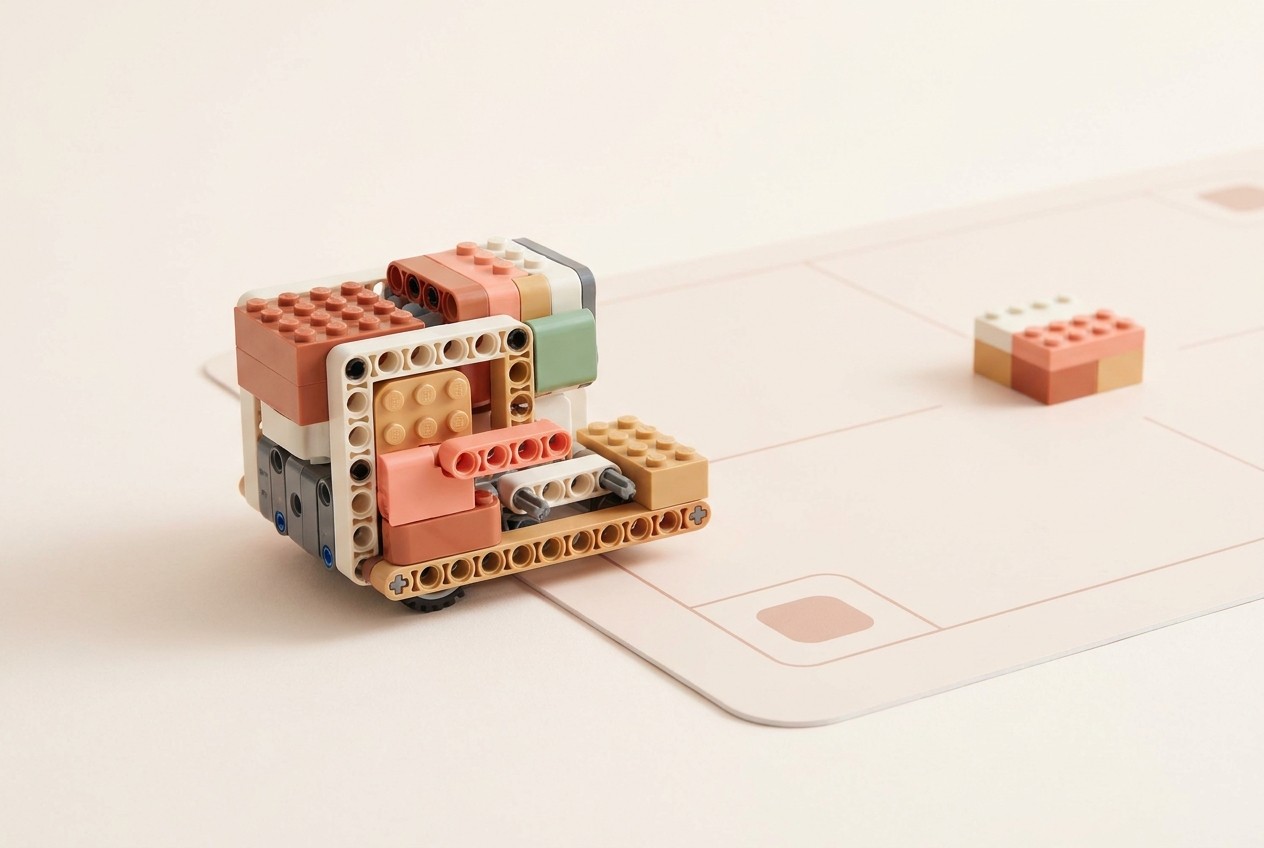
This is the part that distinguishes robotics from most enrichment, and it is specific to Singapore.
The National Robotics Competition. Science Centre Singapore has run NRC since 1999 with MOE support, and reports more than 68,000 participants and 250,000 supporters to date (Science Centre Singapore). It is divided by age:
Division | Ages |
|---|---|
Preschool | 5-6 |
Lower Primary | 7-9 |
Upper Primary | 10-12 |
Secondary | 13-17 |
Tertiary | 17-20 |
Alongside the Regular Category there is an Open Category and an AI Maker Series. For 2026, registration closed on 1 and 8 July, competition runs 17-20 and 24-28 August, and the award ceremony is on 1 September 2026. Teams enter with a coach or mentor rather than individually, in practice through a school or a learning centre.
FIRST LEGO League is ending, and this one has real deadlines. Separately from NRC, LEGO has ended its partnership with FIRST. By LEGO Education's own account, "FIRST LEGO League comes to an end after the 2026-2027 BIOGLOW season," replaced by a new LEGO League launching August 2027 (LEGO Education). The inaugural 2027-28 season accepts both SPIKE/legacy hardware and the new Computer Science & AI kits. From 2028-29 onward, Computer Science & AI hardware is required, though teams may still use any LEGO bricks in their builds.
If your child competes or intends to, that 2028-29 date is the one to hold on to. It is a fair question to ask any centre selling a competition track today.
A caveat we'd rather state than gloss over: NRC and FIRST LEGO League are different competitions. NRC is run by Science Centre Singapore and is not part of the FIRST programme, so the LEGO-FIRST split does not automatically change it. We have not found a primary source setting out NRC's platform requirements beyond 2026, and we would rather tell you that than guess. If NRC is your target, confirm the current rules with Science Centre Singapore directly.
Direct School Admission. MOE includes "science, mathematics and engineering" among DSA-Sec talent areas (MOE). The 2026 exercise ran 6 May to 2 June 2026 with outcomes by 28 August 2026.
The connection between the two is what parents most often miss. A DSA application is stronger for a competition entry, but strongest for sustained work the child can explain themselves. One NRC season in P6 is thinner evidence than three years of finished builds and a child who can tell you why they geared a robot down.
Robotics marketing tends to promise a lot. The defensible version:
A 2024 meta-analysis in Heliyon pooled ten studies of educational robotics and computational thinking in early childhood and found a large positive effect, with a standardised mean difference of 0.93 and all ten studies pointing the same way (Alonso-Garcia et al., 2024, Heliyon 10(13), e33249). The authors also report high variation between studies (I² = 80.7%), meaning the benefit depends substantially on how it is taught, not merely on the presence of robots in the room.
So: good evidence for computational thinking. Weak-to-absent evidence for the broader claims, better maths grades and improved school performance generally. We'd rather you heard that from us than discovered it later.
Named builds, not adjectives. Covered above. It is the single most revealing question.
Ratio at the bottom of the age range. A six-year-old whose axle won't seat needs an adult in the next thirty seconds, or the hour is lost. Ask specifically about the ratio in the youngest class, not the average.
A visible ladder. Ask where a child who starts now will be in two years. A centre with a real progression can answer in levels and skills. Ours runs six levels, eight two-hour lessons each, 48 lessons and 96 contact hours from beginner to competition-capable, with a written and practical assessment and a certificate at every level.
Kits included and current. SPIKE-generation hardware, kept at the centre, no separate weekly fee.
Who teaches. Ask whether the person in the room on week six is the person you met at the trial.
A trial class before payment. Any centre confident in its teaching offers one.
It usually suits a child who builds things, who takes a failed attempt as information rather than a verdict, and who likes a finished object at the end of an hour.
It suits less well a child who wants an immediate, polished result. Robotics is slow in the first weeks. The robot does the wrong thing far more often than the right one, and that is the point of it. If your child needs quick wins, a block-coding course on screen may be a gentler entry, with robotics later.
The reliable way to find out is an hour in the room. Our free trial class in Serangoon Gardens will tell you more than the rest of this page.
About Champs Robotics. We run LEGO robotics, coding and 3D printing at 12A Kensington Park Road, Serangoon Gardens. Current class schedule is on the site.
What age should kids start coding, and how the MOE pathway changes the answer
What the evidence actually supports about robotics and child development
Our competition track, for NRC and DSA families
What robotics classes cost in Singapore, and how to read a quote
Robotics and coding for DSA, and when to start building a portfolio
It's a cheap test of whether a centre is following its own field, and we'd rather you asked us than took our word for it. Book a free trial class and put the question to whoever's teaching.
What age can a child start LEGO robotics? Six for a first introduction, seven to eight for steady progress. LEGO Education places SPIKE Essential at Grades 1-5 and SPIKE Prime at Grades 6-8, and NRC opens its Lower Primary division at age 7.
How much do LEGO robotics classes cost in Singapore? In-person centres cluster at roughly S$45-55 per hour including GST and kit use, which puts an eight-lesson block of two-hour classes at about S$720-800. Competition tracks run higher, typically S$2,400-2,900 per season.
Is LEGO robotics just playing with LEGO? The bricks are the medium, not the lesson. The work is building a machine that has to perform a specific job reliably, then debugging it when it doesn't, separating a mechanical fault from a coding fault.
Do we need to buy a kit at home? Not at a well-run centre. Kits should be included in the fee and kept on site. A separate weekly kit charge usually means the headline price isn't the real price.
Does LEGO robotics help with DSA? It can contribute to a science, mathematics and engineering application. Sustained work the child can explain carries more weight than a single competition entry, so the timeline matters more than the trophy.
Has LEGO SPIKE been discontinued? Yes. LEGO Education ended sales of SPIKE Prime and SPIKE Essential on 30 June 2026. Existing kits keep working, and the SPIKE App is supported until 30 June 2031. The successor line is LEGO Education Computer Science & AI.
Is MINDSTORMS still used? No. LEGO discontinued MINDSTORMS in 2022. A centre still advertising it as its platform is working from information four years out of date.
Should I wait for the new kits before enrolling? No. What a child learns transfers across platforms and into text-based languages later: sequencing, loops, debugging, and telling a mechanical fault from a logic fault. The bricks are the delivery mechanism, not the lesson. The only reason to care about hardware timing is competition eligibility from the 2028-29 season.